

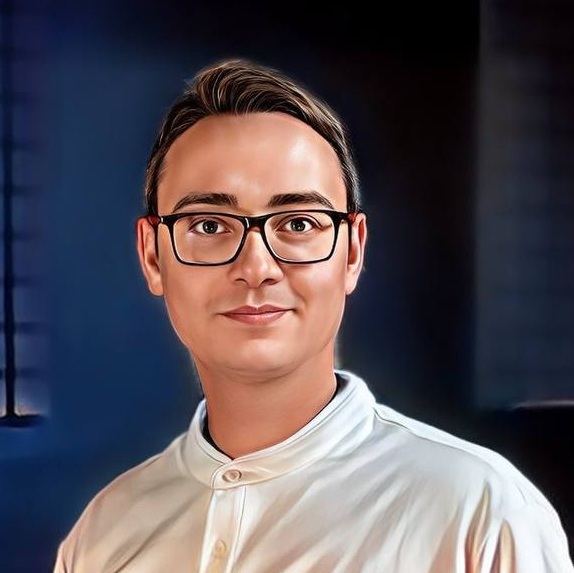


On January 11, 2009, Hal Finney posted a short phrase:
“Running bitcoin.”
It wasn’t an announcement. It wasn’t marketing.
It was an engineer’s log entry: the system is up.
At that moment, Bitcoin was worth nothing. There were no exchanges, no venture funds, no institutional reports. There was code, a handful of computers, and an idea — digital money without a central authority. Finney became the first person, besides Satoshi Nakamoto, to run a Bitcoin node and the first to receive a transaction: 10 BTC in block 170.
Later he recalled, calmly:
“I think I was the first person besides Satoshi to run bitcoin.”
No grandstanding. Just a fact.
But his story began long before Bitcoin.
Harold Thomas Finney II was born in 1956 in California. He graduated from Caltech, one of the most demanding technical institutions in the United States, with a degree in engineering. From an early age, he was drawn to cryptography and the philosophical implications of digital privacy.
In the 1990s, Finney became one of the early contributors to PGP (Pretty Good Privacy), the encryption software created by Phil Zimmermann. PGP became a symbol of the idea that ordinary people deserved strong cryptography — not as a luxury, but as a right.
Colleagues consistently described Finney the same way: calm, precise, technically brilliant, and free of ego. He preferred fixing code to winning arguments.
He was also an active participant in the cypherpunks mailing list — the intellectual environment where digital cash was debated long before it became a market. Discussions there revolved around proof-of-work, censorship resistance, and cryptographic autonomy. Many of the concepts later embodied in Bitcoin were refined in those conversations.
In 2004, Finney launched RPOW (Reusable Proof of Work). He wrote:
“The idea behind RPOW is that proof-of-work tokens are hard to create but easy to verify.”
RPOW was an attempt to create digital scarcity — a system in which computational effort could become a transferable, limited asset. It did not become global money. But technically, it was a bridge.
When Satoshi Nakamoto published the Bitcoin whitepaper in 2008 to the same mailing list, Finney responded almost immediately:
“Bitcoin seems to be a very promising idea.”
He downloaded the client.
He ran the node.
He began testing.
In January 2009, he received the first Bitcoin transaction — 10 BTC sent as a test. At the time, it meant nothing financially. It was simply a proof that the network functioned.
In his 2013 essay “Bitcoin and me,” Finney recalled that in the early days he was simply experimenting with the software, not fully grasping what it might become. There was no market, no speculation. Just curiosity.
In August 2009, the same year Bitcoin launched, Finney was diagnosed with ALS (amyotrophic lateral sclerosis).
“I was diagnosed with ALS in August 2009.”
The disease gradually paralyzed his body. By 2013, he was almost completely immobilized and communicated using an eye-tracking system. Yet he continued writing. Continued thinking. Continued engaging with Bitcoin.
Journalists who spoke with him in his final years often remarked on his composure. No bitterness. No self-pity. Only a persistent interest in the future of technology. His wife, Fran Finney, stood by him throughout — their decades-long marriage unfolding alongside both illness and digital revolution.
After his death in 2014, his body was cryonically preserved at his request. A fitting decision for a man who had already placed one successful bet on the technological future.
Within the early Bitcoin community, Finney was regarded as a figure of exceptional integrity. Developers recalled that Satoshi trusted him and took his feedback seriously. He was not a public face. He was a technical backbone.
Today the industry debates ETFs, regulation, and billion-dollar valuations. But in January 2009, everything rested on a few individuals willing to run experimental software and see if it worked.
History often centers on the mystery of Satoshi.
But without Hal Finney, Bitcoin might have remained a solitary experiment.
He did not build a personal brand.
He did not monetize hype.
He did not sell promises.
He did what real engineers do:
He launched the system.
He tested it.
He improved it.
And quietly recorded it in two words:
Running bitcoin.
If we are to build a modern series about the lives that shaped digital civilization, it should begin not with those who profited from the network — but with those who helped bring it to life.

Top comments (0)