
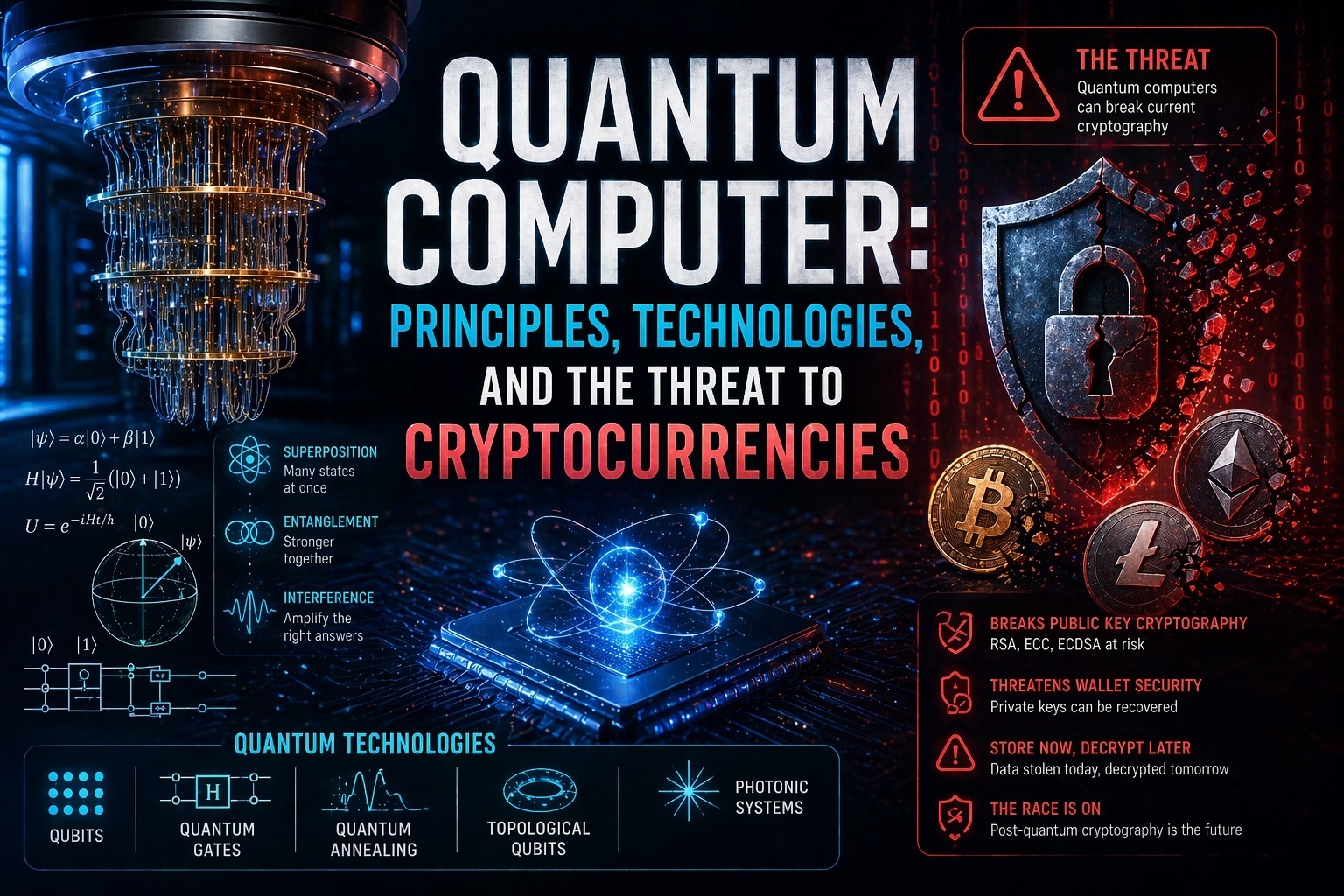

Квантовый компьютер (quantum computer) – это машина, которая использует квантовомеханические явления (суперпозицию и запутанность), чтобы решать задачи, неподъёмные даже для самых мощных классических суперкомпьютеров. В отличие от классических битов (0 или 1), квантовые биты, то есть кубиты (qubit), могут быть 0, 1 или тем и другим одновременно, что даёт параллельные вычисления. Главная угроза для криптовалют – алгоритм Шора (Shor’s algorithm): он ломает ECDSA, на которой держится безопасность Bitcoin и Ethereum. По данным Google (март 2026) и Caltech (апрель 2026), квантовому компьютеру с 10 000–26 000 физических кубитов хватит 9 минут, чтобы вывести приватный ключ из публичного, – это сопоставимо со временем подтверждения блока в Bitcoin. Под прямой угрозой около 6,9 млн BTC (почти треть всех добытых биткоинов), включая монеты эпохи Сатоши на P2PK-адресах.
Как работает квантовый компьютер
Квантовый компьютер – принципиально другая вычислительная архитектура, построенная на законах квантовой физики. Он не заменяет классические компьютеры, а решает отдельные задачи, неподъёмные для обычных машин.
Классические компьютеры работают на транзисторах, которые последовательно принимают значение 0 или 1. Эти единицы информации называются битами.
Квантовый компьютер использует кубиты (quantum bits) – объекты (ионы, сверхпроводники, фотоны), которые могут одновременно находиться в состояниях 0 и 1. Это называется суперпозицией (superposition).
Суперпозиция позволяет квантовому компьютеру обрабатывать множество возможных решений параллельно, а не перебирать их одно за другим.
Ключевые эффекты, на которых держатся квантовые компьютеры:
Суперпозиция: кубит может быть 0, 1 или комбинацией того и другого одновременно. Система из 300 кубитов описывает больше состояний, чем атомов в наблюдаемой Вселенной.
Квантовая запутанность (quantum entanglement): связь между двумя или более кубитами, при которой изменение одного мгновенно сказывается на другом независимо от расстояния. Это позволяет работать с множеством кубитов как с одной системой.
Интерференция (interference): квантовый эффект, который усиливает верные вычислительные пути и гасит неверные, подталкивая систему к оптимальному ответу.
Чтобы удвоить мощность классического компьютера, нужно вдвое больше транзисторов. Квантовому компьютеру достаточно добавить один кубит, чтобы удвоить мощность. Квантовые компьютеры особенно сильны в оптимизации, моделировании и криптографических задачах.
Сегодняшние технологии и гонка кубитов
В 2026 году квантовые компьютеры перешли из лабораторных экспериментов в коммерческую реальность. Инвестиции достигли десятков миллиардов долларов, а ведущие компании развернули системы с тысячами кубитов.
Гонку ведут несколько компаний и стран, используя разные физические реализации:
Сверхпроводящие кубиты: их разрабатывают IBM, Google и другие. Самый распространённый подход: быстрые операции, но нужны сверхнизкие температуры (~15 мК). IBM работает над системами более чем с 1 100 кубитами.
Ионы в ловушках: кубиты – это отдельные заряженные атомы, которые удерживают электромагнитные поля. Главное преимущество – рекордная точность вычислений.
Нейтральные атомы: быстро растущий новый подход, который управляет массивами из тысяч кубитов. Именно эта технология заставила пересмотреть оценки взлома криптовалют.
Фотонные кубиты: используют частицы света, их разрабатывают компании вроде PsiQuantum. Позволяет задействовать традиционные технологии производства чипов.
Google, долго делавший ставку на сверхпроводящие кубиты, в 2026 году объявил, что расширяет работу над системами на нейтральных атомах. Хартмут Нефен, основатель и руководитель Google Quantum AI, заявил, что обе технологии рассматриваются как взаимодополняющие пути к коммерчески значимым квантовым системам к концу десятилетия.
В России над квантовым компьютером работают несколько научных центров, включая Физический институт имени Лебедева (ФИАН). Там продемонстрировали 70-кубитный компьютер на ионах в ловушке. Как отметил старший научный сотрудник Илья Заливако: «Внутри этого железного ящика – вакуумная камера с ионной ловушкой, сердце квантового компьютера».
| Технология | Примеры | Особенности |
|---|---|---|
| Сверхпроводящие | IBM, Google | Быстрые, требуют криогенного охлаждения |
| Ионы в ловушках | IonQ, ФИАН | Высокая точность, сложно масштабировать |
| Нейтральные атомы | QuEra, Oratomic | Тысячи кубитов, гибкая связность |
| Фотонные | PsiQuantum | Используют свет, интегрируются с полупроводниками |
Угроза для криптовалют: алгоритм Шора
С помощью алгоритма Шора квантовый компьютер решает задачи факторизации целых чисел и дискретного логарифма за минуты – задачи, которые для классических компьютеров практически неразрешимы. Именно на них держится безопасность Bitcoin и Ethereum (ECDSA).
Алгоритм Шора, разработанный Питером Шором в 1994 году, теоретически позволяет квантовому компьютеру взломать RSA и ECDSA. До недавнего времени считалось, что для этого понадобятся миллионы физических кубитов. Но в марте–апреле 2026 года появились исследования, которые резко снизили этот порог.
Google Quantum AI (30 марта 2026)
Google опубликовал техническую работу, из которой следует, что для взлома криптографии Bitcoin и Ethereum может хватить менее 500 000 физических кубитов или всего 1 200–1 450 качественных логических кубитов – улучшение в 20 раз по сравнению с прежними оценками. Такая машина вывела бы приватный ключ из публичного примерно за 9 минут.
Это критично, потому что среднее время подтверждения блока в Bitcoin – около 10 минут. Значит, квантовый противник мог бы перехватить транзакцию в мемпуле (mempool) с вероятностью успеха около 41%.
Caltech (апрель 2026)
Одновременно международная команда из Caltech опубликовала работу, которая показывает: квантовые вычисления на платформах с нейтральными атомами могут выйти на криптографически значимый уровень всего с 10 000–26 000 физических кубитов. Благодаря параллелизму и улучшенной коррекции ошибок дискретный логарифм для эллиптической кривой P-256 можно было бы вычислить за несколько дней на системе из 26 000 кубитов.
Какие криптовалюты под угрозой?
Под угрозой все блокчейны, использующие ECDSA, – включая Bitcoin, Ethereum и подавляющее большинство других сетей.
В white paper Google сказано, что под прямой угрозой около 6,9 млн BTC. Это монеты в кошельках, где публичный ключ уже раскрыт в блокчейне: либо на старых P2PK-адресах (эпоха Сатоши), либо из-за повторного использования адреса. Эти 6,9 млн BTC – примерно 33% от биткоинов в обращении. По иронии судьбы обновление Taproot, задуманное для улучшения приватности, теперь по умолчанию делает публичные ключи видимыми, расширяя поверхность квантовой атаки.
Ethereum уязвим ровно так же: его публичные ключи используются повсюду, в том числе в стейкинг-контрактах, где публичный ключ раскрыт постоянно. Консультационный совет Coinbase (в него входят криптографы Дэн Боне и Джастин Дрейк) подтвердил, что появление «отказоустойчивого квантового компьютера» становится всё более вероятным, и готовиться надо уже сейчас.
Q-день и атака HNDL
Q-день – гипотетический день, когда квантовый компьютер станет достаточно мощным, чтобы взломать современную криптографию. Атака «собери сейчас, расшифруй потом» (harvest now, decrypt later, HNDL) усугубляет проблему: злоумышленники уже собирают публичные ключи, чтобы вскрыть их после появления квантового компьютера.
В сентябре 2025 года Федеральная резервная система США опубликовала аналитическую работу с предупреждением: даже своевременный переход на постквантовую криптографию не защитит приватность исторических данных из-за неизменяемости блокчейна. Квантовый компьютер мог бы массово восстановить приватные ключи и определить, какие адреса принадлежат одному человеку.
Эксперты оценивают, что на взлом одной транзакции квантовому компьютеру нужно около девяти минут – быстрее среднего времени подтверждения блока в Bitcoin.
Как готовиться: постквантовая криптография
Готовой заплатки для классических алгоритмов против квантовых атак нет. Единственное решение – полный переход на постквантовую криптографию (post-quantum cryptography, PQC), которая опирается на математические задачи, устойчивые к алгоритму Шора.
NIST (Национальный институт стандартов и технологий США) уже в 2024 году утвердил первые постквантовые стандарты, включая схемы подписей на решётках и на хешах. Среди них CRYSTALS-Dilithium, Falcon и SPHINCS+, построенные на задачах, которые не поддаются эффективному решению даже мощному квантовому компьютеру.
Как Cellframe отвечает на квантовую угрозу
В отличие от большинства блокчейнов, которые только начинают обсуждать планы миграции, Cellframe проектировался с постквантовой защитой с первого дня.
| Что использует Cellframe | Как это защищает |
|---|---|
| CRYSTALS-Dilithium (ML-DSA) | Основные подписи блоков, устойчивые к алгоритму Шора |
| Falcon (FN-DSA) | Компактные подписи для транзакций |
| SPHINCS+ (SLH-DSA) | Резервный алгоритм на хешах (доступен в SDK) |
| Kyber 512 (ML-KEM) | Постквантовый обмен ключами для защищённых каналов |
Все эти алгоритмы основаны на решётчатых или хеш-задачах – устойчивых и к классическим, и к квантовым атакам. Кроме того, Cellframe может быстро выводить из обращения или добавлять новые алгоритмы по мере развития стандартов PQC и обновления рекомендаций NIST.
Сравнение: уязвимость Bitcoin, Ethereum и других
| Блокчейн | Криптография | Уязвим к Шору | Статус защиты (2026) |
|---|---|---|---|
| Bitcoin | ECDSA | Да (полностью) | Обсуждаются BIP-360/361, миграция не начата |
| Ethereum | ECDSA | Да (полностью) | EIP-8141, дорожная карта до 2029 года |
| Cellframe | CRYSTALS-Dilithium, Falcon | Нет | Полностью готов, аудит пройден |
Глоссарий
| Термин | Определение |
|---|---|
| Кубит (qubit) | Базовая единица квантовой информации; может находиться в суперпозиции 0 и 1 одновременно. |
| Суперпозиция (superposition) | Способность кубита существовать сразу в нескольких состояниях. |
| Квантовая запутанность (quantum entanglement) | Связь между кубитами, при которой измерение одного мгновенно определяет состояние другого независимо от расстояния. |
| Алгоритм Шора (Shor’s algorithm) | Квантовый алгоритм, который раскладывает большие числа на множители и решает дискретные логарифмы за минуты – ломает ECDSA и RSA. |
| Q-день (Q-day) | Гипотетический день, когда квантовый компьютер сможет взломать современную криптографию (RSA, ECDSA). |
| Постквантовая криптография (post-quantum cryptography, PQC) | Алгоритмы, устойчивые к атакам квантовых компьютеров и работающие на классическом железе. |
Итог
Квантовый компьютер – не замена классическим, а специализированный инструмент для отдельных классов задач: оптимизации, моделирования и взлома криптографии.
В 2026 году технология перешла из лабораторий в коммерческую разработку, а требуемая для взлома криптографии мощность упала на порядки. Оценки Google (500 000 физических кубитов, взлом за 9 минут) и Caltech (10 000–26 000 кубитов, взлом за дни) означают, что угроза уже настолько близко, что у отрасли 3–5 лет на подготовку.
Bitcoin и Ethereum в зоне риска: их архитектуры не закладывались под постквантовую защиту, а планы миграции только обсуждаются. Более 6,9 млн BTC (~$600 млрд) уже уязвимы к атакам на монеты в состоянии покоя (at-rest).
Решение – не паника, а постквантовая криптография: алгоритмы, устойчивые к алгоритму Шора. Cellframe – одна из немногих платформ, изначально построенных на PQC, и она уже использует одобренные NIST CRYSTALS-Dilithium, Falcon и Kyber 512.
И когда наступит Q-день, Cellframe не придётся догонять – она уже там.


Top comments (0)